
The Initial Context
When Groupe ARC Design took over the R2 project, the existing space presented several challenges: it was aesthetically outdated, with a long and narrow layout that limited interaction between occupants. The configuration made it difficult to create a collaborative and community-oriented atmosphere.
The Project Goal
The team established a clear objective: to create a modern, industrial-style environment that would encourage employees to return to the office and foster natural interactions between colleagues.
Selection Criteria
With more than 50 workstations concentrated within a single open space, Groupe ARC Design established three key criteria:
Aesthetics. A cohesive modern industrial design.
Quality. Durable, high-performance materials.
Budget. A cost-effective and realistic solution.
The Choice of Carpet Tiles
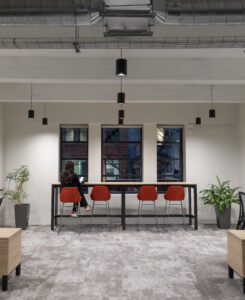
The team identified carpet tiles as a strategic element of the project. In an open office designed for 50 people, acoustics are a critical factor that directly impacts occupant productivity and comfort.
Carpet tiles offered three major advantages: sound absorption, underfoot comfort, particularly important in a space where people are constantly moving, and the flexibility to adapt the space to future needs.
The Selection : Mood Collection
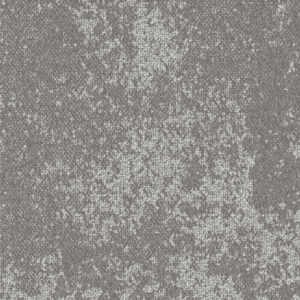
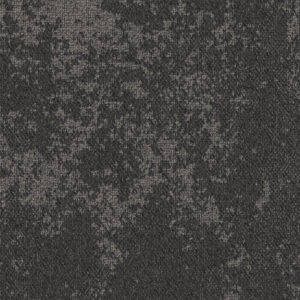
The industrial concrete-inspired pattern and neutral tones aligned perfectly with the project’s overall vision.
Design Strategy: Texture and Depth
The team developed an approach focused on texture rather than colour. The overall palette was kept neutral and minimalist, allowing key elements, particularly R2’s red brand identity, to stand out naturally.
Chill – 10184 in the collaborative space creates a sense of openness and lightness.
Expression – 15427 in the private areas introduces an intentional contrast that adds visual depth throughout the environment.
The Importance of the Selection Process
One of the key takeaways from the project: the carpet tiles were not selected last. They were among the very first elements chosen and helped guide the direction of the overall design. This approach created a level of visual and functional cohesion that would have been difficult to achieve otherwise.
Covering more than 50% of the project’s total surface area, the carpet tiles provided visual continuity across every zone, including the collaborative workspace, cafeteria, lounge area, conference rooms, and private offices.
Managing Cohesion
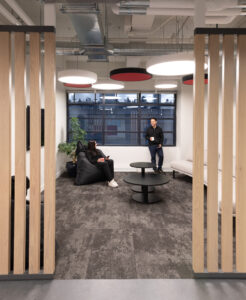
One of the project’s challenges was integrating two different colourways across a variety of distinct spaces. To avoid a fragmented appearance, the Groupe ARC Design team carefully coordinated the carpet tiles with the other finishes, walls, lighting, and furniture to ensure a cohesive and intentional design throughout.
Why Recommend Tapis Venture?
According to the Groupe ARC Design team:
“Tapis Venture offers exceptional modular carpet products made in Canada, with excellent value, outstanding service, and high-quality products. Venture’s sustainability values also aligned with those of the project and the client.”
Principles Applicable to Other Environments
Although this project focused on a workplace environment, the principles identified can be applied to all types of public-facing spaces, including restaurants, cafés, hotels, commercial spaces, studios, and trade show environments.
Texture creates just as much depth as colour. A minimalist palette with variations in texture allows key elements to stand out naturally while creating a visually engaging environment without overwhelming the space.
Conclusion
The R2 project demonstrates how a strategic approach to elements often considered secondary, such as flooring finishes, can fundamentally transform a space. These principles are transferable to any design project aiming to create an environment that is both high-performing and enjoyable.
Client: R2
Location: Édifice le Méco, 415 Rue Saint-Antoine West, Suite 250, Montréal, QC H2Z 2B9
By: Groupe ARC Design
Team: Aimée Jill Bradley, Architect
Sierra Pye, Interior Designer


